No products in the cart.

If you’ve started looking into SEO, you’ve probably come across the recommendation to get an SEO audit before investing in ongoing optimization. That advice is common, but many business owners aren’t sure what an audit actually includes or whether it’s worth paying for.
A professional SEO audit is more than a list of technical errors. It provides a detailed evaluation of your website, identifies the issues limiting your visibility in search engines, and prioritizes the improvements most likely to have a meaningful business impact. This guide explains what to expect from an SEO audit, when it makes sense to invest in one, and how to distinguish a valuable audit from a generic automated report.
Why Businesses Pay for SEO Audits

Most business owners don’t suddenly decide they need an SEO audit. There’s usually a problem to solve or an important decision on the horizon.
Sometimes it’s obvious. Organic traffic has dropped, lead generation has slowed, or a recent redesign didn’t produce the expected results. Other times, the business is preparing to invest in SEO and wants to understand its current position before committing to monthly services.
An SEO audit helps answer questions like:
- Why isn’t my website attracting more visitors?
- Why aren’t those visitors becoming customers?
- Are there technical issues preventing Google from understanding my site?
- What improvements will have the biggest impact?
A professional audit also helps uncover opportunities that aren’t immediately obvious. For example, a business may already have content that could rank much higher with a few targeted improvements, or they may discover that important service pages are difficult for both users and search engines to find.
Rather than guessing where to spend time and money, an SEO audit creates a prioritized plan based on the website’s current condition. That makes it easier to invest in improvements that are likely to yield measurable results rather than chasing every SEO tip or trend.
What a Professional SEO Audit Should Actually Include

A quality SEO audit looks at every major factor that affects your website’s visibility in search results. Rather than focusing on a single issue, it examines your site’s technical health, content, structure, and overall search performance to identify the improvements that will have the greatest impact.
While every website is different, most professional audits include the following areas.
Technical Health
Technical SEO forms the foundation of a website’s search performance. Even great content can struggle to rank if search engines can’t properly crawl or understand your pages.
A technical review typically includes:
- Crawlability and indexability
- Site speed and Core Web Vitals
- Mobile usability
- Broken links and redirect issues
- Duplicate content
- XML sitemaps and robots.txt configuration
- Canonical tags and other indexing signals
For example, imagine a local plumber whose website has dozens of service pages, but only the homepage appears in Google search results. An SEO audit might discover that search engines can’t crawl the site properly due to a technical configuration issue. Until that’s fixed, creating more content or paying for additional marketing is unlikely to produce better results.
On-Page SEO
Once the technical foundation is understood, the audit evaluates on-page SEO, or how individual pages communicate their purpose to both visitors and search engines.
This often includes reviewing:
- Title tags and meta descriptions
- Heading structure
- Keyword targeting
- Internal linking
- Thin, outdated, or duplicate content
- Opportunities to improve clarity and search intent
For example, a service page may rank poorly not because the website is broken, but because it doesn’t clearly explain what the business offers or target the phrases potential customers are searching for.
Local SEO
For businesses that serve a specific geographic area, a local SEO review may include:
- Google Business Profile optimization
- Name, address, and phone number (NAP) consistency
- Local landing pages
- Review quality and quantity
- Citation accuracy across online directories
Site Structure
A professional audit also reviews your navigation, URL structure, and page hierarchy to make sure important content is easy for both users and search engines to find. It may also identify opportunities to improve internal linking between related pages.
Competitive Insights
A good audit compares your website against the businesses you’re actually competing with in search results. The goal is to identify practical opportunities, such as keyword gaps, missing service pages, or content topics that could improve your visibility.
Prioritized Recommendations
Perhaps the most valuable part of an SEO audit is the action plan that follows.
The best audits don’t simply produce a long list of issues. They explain which recommendations should be addressed first, why they matter, and what impact they’re likely to have.
For example, fixing pages that Google can’t index is usually far more important than adjusting a handful of meta descriptions. A well-organized audit helps you focus on the improvements most likely to drive progress.
What an SEO Audit Does Not Do

An SEO audit is a diagnostic tool, not a complete SEO campaign. Its purpose is to identify what’s holding your website back and to recommend the improvements most likely to increase your visibility in search results.
That means an audit doesn’t automatically fix problems or improve rankings on its own. Someone still needs to implement the recommendations, whether that’s you, your web developer, or your SEO consultant.
A professional audit also shouldn’t promise guaranteed rankings. Search performance depends on many factors, including competition, the quality of your content, your website’s authority, and the work completed after the audit. Any provider that guarantees first-page rankings based on an audit alone should be approached with caution.
One of the easiest ways to think about an SEO audit is to compare it to a home inspection before buying a house. The inspection identifies structural issues, maintenance concerns, and potential risks, but it doesn’t repair the roof or replace the plumbing. It gives you the information you need to make informed decisions about what should happen next.
The same is true for SEO. A well-executed audit provides a roadmap for improving your website, helping you prioritize the changes that will have the greatest impact instead of relying on guesswork.
Free SEO Reports vs. Professional Audits
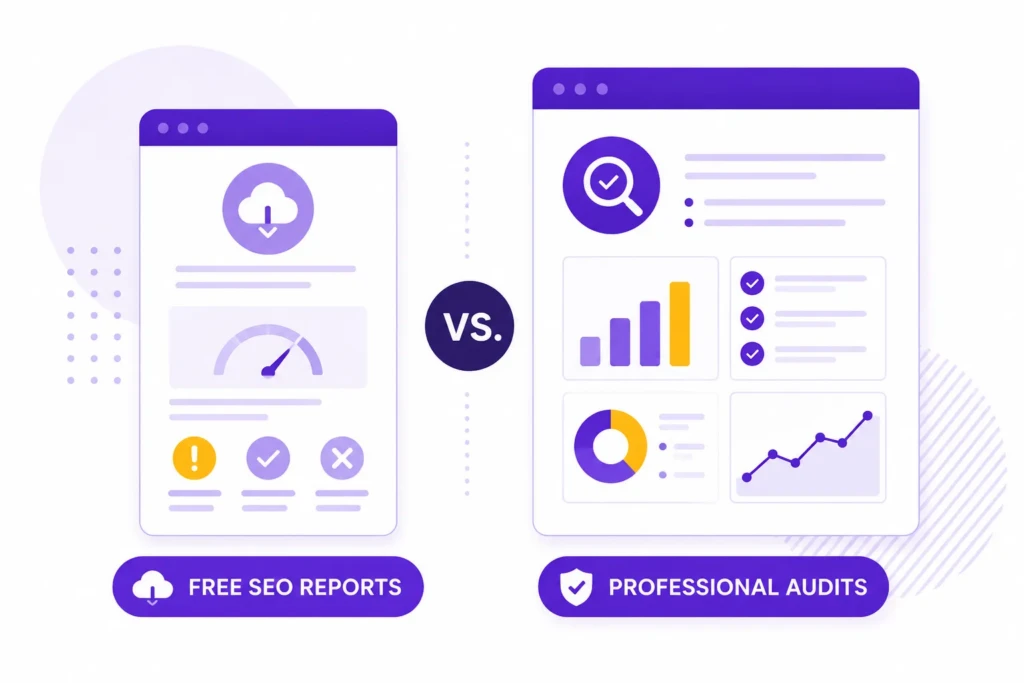
If you’ve searched for an SEO audit online, you’ve probably come across dozens of free website analyzers. These tools can be useful, but it’s important to understand what they can and can’t tell you.
Most free SEO reports automatically crawl your website and generate a list of issues based on predefined rules. They can quickly identify issues such as missing title tags, broken links, oversized images, or pages with duplicate metadata. That makes them a helpful starting point, especially if you’ve never evaluated your site before.
The limitation is that automated tools have no understanding of your business.
They don’t know which pages generate leads, which services are your highest priority, or whether a recommendation is actually worth your time. As a result, it’s common to see reports filled with hundreds of warnings, ranging from critical issues to minor housekeeping tasks.
A professional SEO audit combines software with human analysis. An experienced consultant uses SEO tools to gather data and also evaluates your website in the context of your business goals, target audience, and competitors.
| Free SEO Report | Professional SEO Audit |
|---|---|
| Automated | Manual + automated |
| Generic recommendations | Business-specific recommendations |
| Little or no prioritization | Prioritized action plan |
| Mostly technical issues | Technical, content, local SEO, competitors |
| Usually, a lead-generation tool | Strategic consulting deliverable |
For example, an automated report might flag dozens of missing image alt attributes while overlooking the fact that your primary service page isn’t targeting the searches your customers actually use. It may report a healthy technical score even though your navigation makes important pages difficult to find or your local SEO strategy is missing entirely.
Free SEO reports are valuable for identifying obvious technical issues. A professional audit goes much further by helping you understand which problems are actually limiting your search performance and which improvements are most likely to produce measurable results.
When Paying for an SEO Audit Makes Sense

Not every website needs an SEO audit right away. It’s most valuable when you’re preparing to make an important marketing decision or trying to understand why your website isn’t performing as expected.
You’re About to Invest in SEO
An audit establishes a baseline before you commit to ongoing SEO. It identifies the highest-priority issues first, helping you invest your budget where it’s most likely to produce results.
Traffic or Leads Have Declined
A drop in traffic or inquiries doesn’t always mean you need more content. Technical issues, indexing problems, or changes to your website may be limiting your visibility. An audit helps identify the root cause before you spend money solving the wrong problem.
Before a Website Redesign
Redesigns can improve the user experience, but they also introduce SEO risks. An audit helps preserve existing rankings by identifying important pages, planning redirects, and highlighting technical issues before the new site launches.
You’ve Never Had a Professional Review
Many websites gradually accumulate SEO issues over time. An audit provides an objective review that often uncovers opportunities to improve visibility without having to start your SEO strategy from scratch.
A professional audit is most valuable when it helps you make better decisions. If it prevents months of effort from being spent on the wrong priorities, it often pays for itself.
When an SEO Audit May Not Be Worth It

An SEO audit isn’t the right investment for every website.
For example, a brand-new website with only a handful of pages usually doesn’t need an extensive audit. At that stage, it’s more important to build quality content and establish a solid website structure than to analyze a site that doesn’t yet have much to evaluate.
An audit may also provide limited value if organic search isn’t an important part of your marketing strategy or if you have no plans to implement the recommendations. The real value comes from acting on the findings over time, not simply receiving a report.
Ultimately, an SEO audit is most worthwhile when you’re committed to improving your website and making informed marketing decisions.
How to Evaluate an SEO Audit Service

Not all SEO audits provide the same level of value. Some consist of little more than an automated report, while others include hours of manual analysis and a clear strategy for improving your website.
Before hiring an SEO consultant or agency, it’s worth asking a few questions about what you’ll actually receive.
Ask What You’ll Receive
A professional audit should be more than a spreadsheet of technical issues. While every consultant has a different process, you should expect deliverables that help you understand both the problems and the recommended next steps.
That might include:
- A written audit report
- Prioritized recommendations
- Screenshots or examples that explain key findings
- A strategy meeting to review the results and answer questions
Regardless of the format, you should come away understanding what needs improvement and why.
Ask How Recommendations Are Prioritized
Every website has room for improvement. The difference between an average audit and a great one is knowing which improvements deserve your attention first.
For example, fixing pages that Google can’t index will usually have a much greater impact than adjusting a handful of image file names or meta descriptions. A good consultant should explain which recommendations are critical, which are worthwhile, and which can wait until later.
Prioritization helps you spend your time and budget where they’re most likely to improve your search visibility.
Be Careful of Red Flags
An SEO audit should leave you with confidence, not confusion. If a provider relies on vague promises or overwhelming reports, it’s worth asking more questions before moving forward.
Some common warning signs include:
- Guaranteed first-page rankings
- Hundreds of reported “errors” without explaining which ones actually matter
- Automated reports presented as custom consulting
- Little or no explanation behind the recommendations
- Extremely low pricing that doesn’t allow time for meaningful manual analysis
A quality SEO audit isn’t valuable because it’s long. It’s valuable because it helps you understand your website, prioritize improvements, and make informed decisions about where to invest next.
How Much Does an SEO Audit Usually Cost?
The cost of an SEO audit varies depending on your website’s size, your business’s complexity, and the extent of manual analysis included. A small local business website requires far less time to review than a large e-commerce or enterprise site.
| Audit Type | Typical Price |
|---|---|
| Free automated scan | Free |
| Basic consultant review | $300-$800 |
| Small business SEO audit | $800-$2,500 |
| Large or complex website | $2,500-$5,000+ |
| Enterprise engagement | Custom pricing |
Some consultants offer different levels of audits. A smaller engagement may focus on your highest-priority pages, while a comprehensive audit reviews your entire website, competitors, and local search presence.
Lower-cost audits are often generated almost entirely by software. More comprehensive audits include manual analysis, strategic recommendations, and prioritization based on your business goals.
Rather than looking for the cheapest audit available, focus on the value you’ll receive. A well-executed audit can uncover opportunities that improve traffic and lead generation for years.
Putting This Into Practice

An SEO audit isn’t something every business needs immediately, but it can be one of the most valuable investments when you’re ready to grow through organic search. Instead of guessing what your website needs, you’ll have a clear understanding of what’s holding it back and which improvements deserve your attention first.
The key is choosing an audit that provides actionable guidance, not just a list of technical issues. A quality audit should leave you with a prioritized roadmap and the confidence to make informed decisions about your next steps.
If you’re preparing to invest in SEO or wondering why your website isn’t attracting more qualified visitors, a professional audit can provide the clarity to move forward with confidence.
Work With TCB Studio
At TCB Studio, every SEO audit includes a manual review of your website’s technical health, content, site structure, and search visibility. Rather than overwhelming you with hundreds of automated warnings, you’ll receive prioritized recommendations that explain what matters most, why it matters, and what to tackle first. Learn more about our SEO Site Audit or get in touch to discuss your website and business goals.