No products in the cart.
Generative engine optimization, or GEO, is the work of making a business easier for AI-powered search and answer tools to understand. It includes clearer service information, consistent business details, accessible website pages, and content that answers the questions customers actually ask.
GEO overlaps with SEO, but the outcomes differ. SEO helps people find webpages in search results. GEO helps answer systems interpret, summarize, compare, and recommend information about a business.
What is GEO?
GEO stands for generative engine optimization. It means improving how a business, website, or piece of content is understood and represented in AI-generated answers.
When someone asks an AI tool for a recommendation, comparison, explanation, or local service, the system decides which information to use and how to summarize it. GEO helps make that information easier to interpret by improving its clarity, structure, accuracy, and accessibility.
You may also see this work called AI optimization or AIO. The terms overlap, but they are not standardized names for completely separate services.
For example, someone might ask an AI tool:
Which Kansas City web designers help small businesses improve technical SEO?
GEO does not guarantee inclusion in an AI answer. It gives a business a stronger information foundation by making important facts easier to find and interpret.
The answer may rely on several sources before a person ever visits a website. It may summarize what a company offers, identify the customers it serves, compare it with other providers, or mention a limitation such as location or project fit. That makes accurate business information important even when the final answer does not link to a particular page.
How Is GEO Different From SEO?

SEO and GEO share many foundations, including accurate information, useful content, clear page structure, and accessible websites.
The difference is the type of visibility each practice supports. An SEO question might be:
Can this page appear for searches related to technical SEO services?
A GEO question might be:
Can an AI system accurately explain which companies provide technical SEO for small businesses in Kansas City?
The same service page may support both goals, but the visibility being evaluated is different.
| SEO | GEO |
|---|---|
| Helps pages appear in search results | Helps information become easier for generative systems to interpret |
| Often measures rankings, impressions, and clicks | May examine mentions, citations, referrals, and answer accuracy |
| Usually directs a person to a webpage | May summarize or compare information before a visit |
For most small businesses, GEO should build on existing SEO work. Improving a service page, correcting business information, or fixing a technical access problem may support both traditional search and generative answers.
What Information Can Influence an AI Answer?
Generative systems may use information from three connected sources: the business website, third-party sources such as profiles and directories, and the technical systems that make important pages accessible.
The website explains what the business offers, who it serves, and how its services work. Profiles, reviews, and other references can reinforce that description or conflict with it. Technical problems can make accurate information difficult to discover or interpret.
For example, a consultant described as a web designer on one page, a marketing agency on another, and an SEO provider in a directory may be difficult to classify consistently. The wording doesn’t need to be identical everywhere, but the underlying facts should match.
A website and a business profile do different jobs. The website can explain services, process, scope, and limitations in detail. A profile or directory listing may provide shorter information about the business name, location, category, contact details, and areas served. Keeping those facts aligned gives each source a consistent role.
What Does GEO Involve?
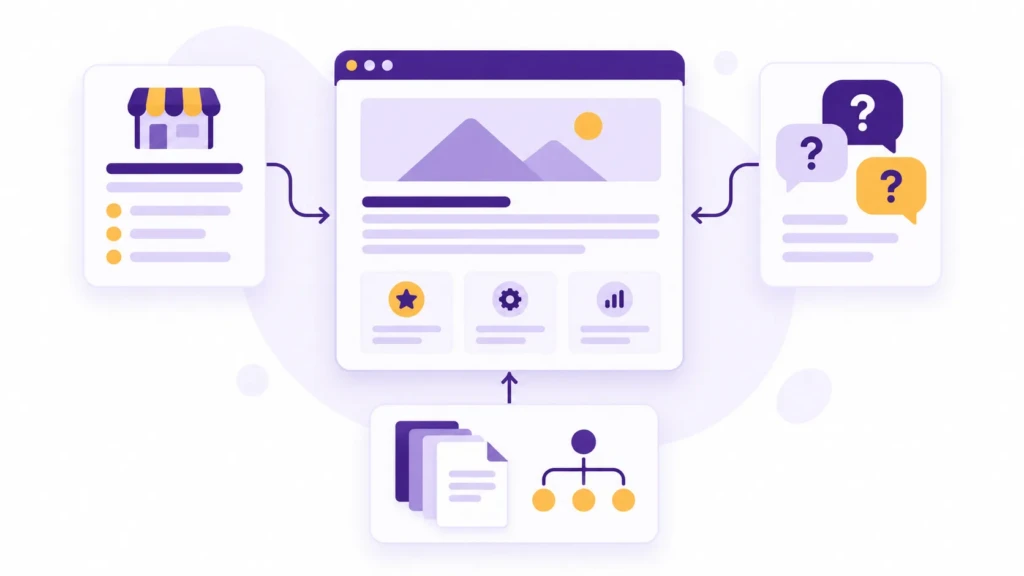
GEO work usually falls into three areas: explaining the business, helping customers understand the service, and making important information technically accessible. The appropriate scope depends on the site and the problem being investigated. Some businesses need clearer pages, while others need listing corrections or technical fixes.
Explain the business clearly
A business should describe its work in language that a customer would recognize. That description should identify the main service, the type of customer served, the problem addressed, and any meaningful geographic or industry focus.
A phrase such as “We build better digital experiences” may sound polished, but it does not explain what the business actually provides. “TCB Studio provides technical SEO, WordPress development, and consulting for small businesses and independent creators” gives readers and answer systems more usable information.
The description should also match the business model. A company that provides focused hourly work should not describe itself only as a full-service agency. A local provider should not imply service areas that it does not actually cover. Accurate positioning gives the rest of the website a clearer foundation.
Build service pages around customer decisions
A service page should help someone decide whether the service fits their situation. It should explain what the service addresses, who typically needs it, what the work includes, what the client is responsible for, and what happens next.
For example, a technical SEO page might distinguish an audit from implementation. An audit may identify indexing, internal linking, or structured data problems. Implementation involves making agreed changes and verifying they work. Keeping those scopes separate gives customers a more accurate understanding of the service.
A service page doesn’t need to answer every possible question, but it shouldn’t force visitors to guess what they are buying. A clear scope, relevant example, and direct next step are more valuable than repeating the service name throughout the page.
Check the technical path
Generative visibility cannot compensate for a page that cannot be accessed, rendered, or understood reliably. Technical SEO work may include reviewing indexing controls, internal links, page structure, structured data, redirects, performance, and mobile behavior.
The right scope depends on the website. A small site with accurate content may need only a focused correction. A larger site with conflicting pages, blocked resources, or outdated templates may need a broader technical review.
Answer questions customers actually ask
Customers often ask about fit, scope, timing, responsibilities, and the next step before they contact a business. Those questions are valuable content targets because they help a person decide whether the service applies to their situation.
A consultant might explain what information a project requires and how an audit differs from implementation. A local service provider might explain who the service is for, what happens during the first appointment, and when another type of help may be appropriate. These topics should come from real customer conversations, contact forms, and sales questions, not a long list of generic keywords.
What GEO Cannot Do
GEO cannot guarantee that a business will appear in ChatGPT, Google AI features, or another answer engine. No provider controls every system that may mention a company, and no optimization method guarantees a particular position in an AI-generated response.
You can check a published change for accuracy and accessibility before you know its effect on future answers. Results may vary by platform, query, location, user, and date. An AI mention is not the same as a qualified lead, and a qualified lead is not the same as a sale.
An audit, an implementation project, and ongoing support also have different purposes. An audit can identify problems and recommend changes. Implementation makes agreed changes and verifies the work. Neither one guarantees better rankings, more mentions, more leads, or more sales.
How Should a Small Business Start With GEO?
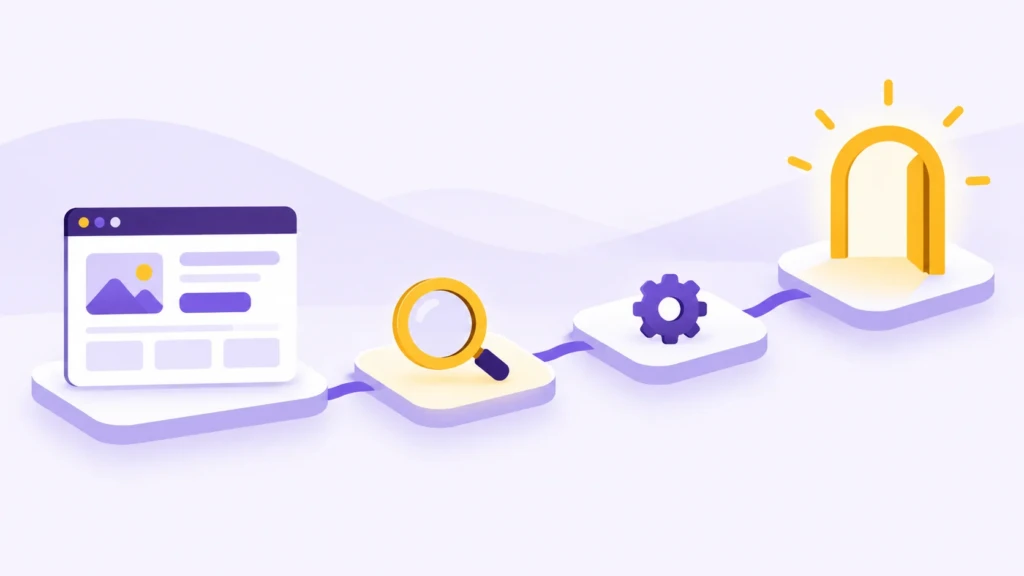
Start with the questions customers ask before contacting the business. Match those questions to the homepage, primary service pages, and business profiles that should answer them.
- Identify the questions customers ask before contacting the business.
- Compare the homepage, main service pages, and primary business profiles against those questions.
- Fix the clearest information or access problem before creating more content.
Look for services that are named but not explained, conflicting locations or service areas, unclear audience descriptions, hidden information, or differences between the website and business profiles. A focused review is usually enough for the first project. Broader work makes sense only when the gaps span many pages or involve deeper technical problems.
Measurement should match the project. If the work corrected a service page, verify that the page is accessible, accurate, and linked where it should be. If the goal is customer discovery, review referral traffic, branded searches, inquiry language, and customer reports over time. These signals provide evidence, but they cannot show every AI answer a person may have received.
Frequently Asked Questions
GEO is still developing, so many businesses are unsure what the work includes and what results they should expect. These questions address the practical decisions that usually come first.
No. SEO focuses on visibility in search engines and often emphasizes rankings, impressions, and clicks. GEO focuses on how information is interpreted and used in generative answers. The technical and content foundations overlap, so strong SEO is usually a useful starting point for GEO.
Not necessarily. A business with clear services, accurate listings, accessible pages, and useful content may need only a focused review. A separate GEO project is more useful when the business depends on recommendations, serves a specialized audience, or has important information spread inconsistently across several sources.
Not necessarily. If the business already has useful pages, improving their clarity, scope, and accessibility may be more valuable than publishing new articles. New content makes sense when customers have recurring questions the current website doesn’t answer.
Measurement depends on the business and the platforms being reviewed. Useful signals may include referral traffic from AI tools, branded search behavior, customer reports of how they found the business, citations, mentions, and changes in the accuracy of generated answers. Review these signals over time because AI answers can vary by query and user context.
Outside help may be useful when the business cannot determine which information conflicts, which pages matter most, or whether technical issues limit access. A focused audit or implementation project may be enough. Ongoing support is only necessary when the website, services, or publishing needs justify regular work.
Summary
GEO improves how AI-powered search and answer tools understand a business. It depends on the same basic foundation as good SEO: accurate information, useful pages, consistent business details, and reliable technical access.
A business doesn’t need to start with a large GEO program. Compare the homepage, main service page, and primary business profile, then fix the most important disagreement or missing explanation first.
Work With TCB Studio
TCB Studio can help review the website structure, service pages, technical SEO issues, and business information that affect how a small business is understood online. The initial scope may involve a focused review of a few important pages rather than a complete website project.
If implementation is needed, TCB Studio offers technical SEO services, hourly work, and monthly support. Bring the pages or customer questions that matter most, along with any current business descriptions that need to be reconciled.