No products in the cart.

Search volume is an essential keyword research metric. It measures how often searchers use certain queries, which is foundational for search engine optimization (SEO) strategies. This guide walks through the basics of search volume and how to consider it during keyword research.
What is Search Volume?
Search volume refers to the number of times a keyword or phrase is searched for on search engines over a specific period, typically monthly.
It’s an essential factor in SEO, as it estimates the potential traffic a keyword can generate. Higher search volumes generally indicate higher user interest in a specific topic or keyword.
Example Keyword Data
Let’s look at keyword data for “plant store” in Ahrefs:
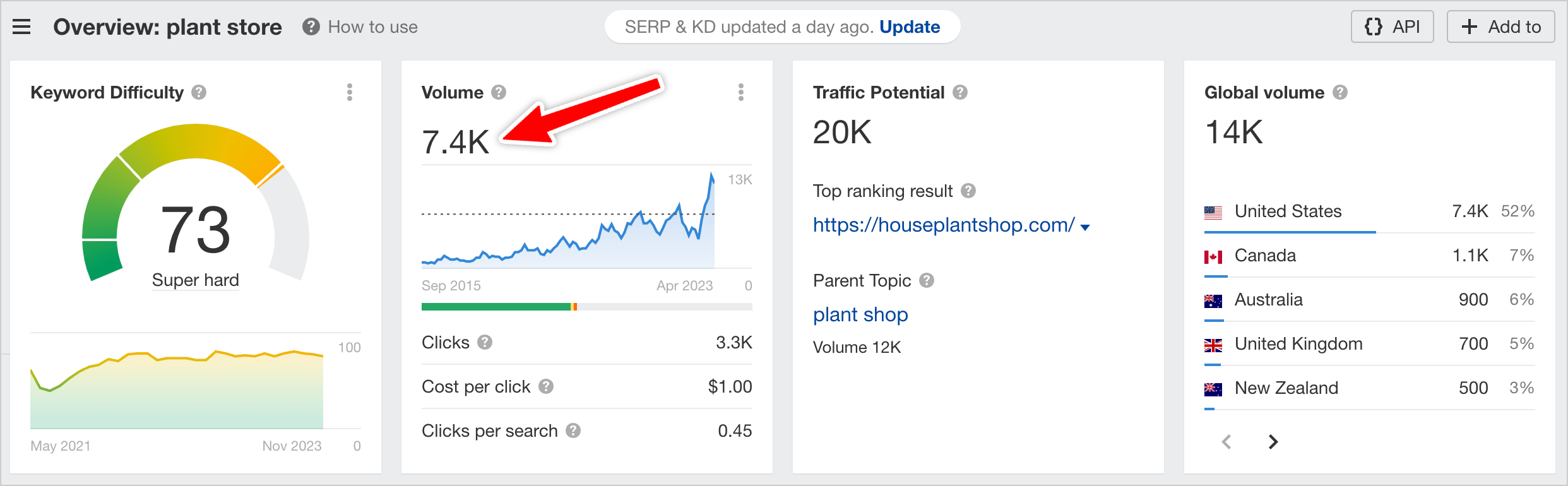
In this instance, the search volume is 7,400. That means users searched “plant store” an average of 7.4K times a month over the past year, according to this data.
Know that this number is the volume of searches in the United States. The global volume, shown on the right, is 14K, with varying volumes across different locations.
Why is Search Volume Important?
Here are some common uses for search volume:
- Keyword Selection: It helps you determine the best keywords to use based on the interest they are garnering online. This can be particularly useful when creating new content, optimizing existing content, or planning a digital marketing strategy.
- Search Trends: By monitoring changes in search volume, you can understand the evolving trends in your industry or niche. This information can guide your content creation strategy, ensuring that your content remains relevant and valuable to your audience.
- Predicting Traffic: High-volume keywords can potentially generate more traffic. However, remember that high volume doesn’t always translate into high traffic, especially when the keyword’s competitive.
How to Find Search Volume
Several tools can help you determine volume and other useful metrics:
- Ahrefs: This paid tool provides similar data, including search volume, keyword difficulty, and keyword suggestions. It also has a feature called “clicks” that shows whether searchers generally click on the results for a particular keyword.
- Semrush: This is a paid tool that provides comprehensive keyword data, including search volume, keyword difficulty, and more. It also offers additional SEO features that can help optimize your website.
- Moz Pro: This is a powerful keyword reporting tool and SEO suite. Provides detailed, accurate data that’s easy to understand and use for action plans.
- Google Keyword Planner: Google’s tool for keyword research. While it’s better for PPC since it doesn’t include difficulty metrics, it’s free and provides broad data for keyword search volume.
How to Use Search Volume
Here are some steps you can follow in your keyword selection process:
- Understand your audience. Before researching keyword data, you should understand your audience and what they might seek. This includes understanding their needs, interests, and the language they use.
- Generate a list of keywords. Based on your understanding of your audience, generate a list of potential keywords. These should include broad terms related to your industry and more specific terms related to your products or services.
- Use a keyword research tool. Input your potential keywords into a keyword research tool to get data on search interest, competition, and related keywords.
- Evaluate and choose keywords. Choose keywords based on their search volume, relevance to your business, and competition level. High-volume, low-competition keywords are valuable for SEO strategies but can be hard to find.
The Role of Long-Tail Keywords
While it can be tempting to target only high-volume keywords, it’s essential to consider long-tail keywords as well. These are longer, more specific phrases with lower volumes and less competition. They also tend to have higher conversion rates as they are more targeted.
Understanding Seasonal Trends
Search volume can fluctuate throughout the year due to seasonal trends. For example, searches for “Halloween costumes” regularly spike in October:
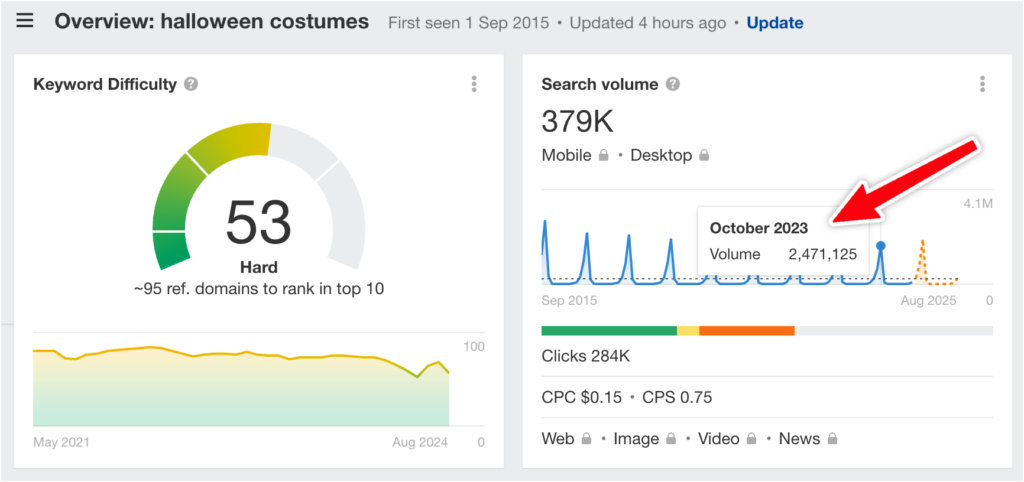
As you can see, for the rest of the year, the search volume sinks in November and spikes again the next year around October.
Some tools, like Ahrefs, even offer keyword forecasting data that can be helpful when considering what terms to target.
It’s essential to consider trends when planning your content strategy, as they can succeed or fail depending on seasonality and demand.
Bottom Line
Understanding and using search volume data is essential to most SEO work. Search volume can guide your keyword selection, inform your content strategy, and help you better understand your users’ needs and interests.
Remember that while high-search-volume keywords can generate more traffic, they also attract more competition. Target keywords that balance relevant search intent, high volume, and low difficulty for best results.