No products in the cart.

Search results are no longer just a list of blue links. Google now enhances many listings with additional information such as ratings, images, FAQs, or product details. These enhanced listings, called rich results, play an important role in how visible your content is in search results.
For businesses, creators, and anyone publishing content online, understanding rich results can help you make your pages stand out and attract more clicks. This guide explains what rich results are, how they work, and how you can implement them on your own website.
What are Rich Results?
A rich result is an enhanced search listing that displays additional information beyond the standard page title, URL, and meta description.
These enhancements are generated using structured data that helps search engines understand a page’s content. When Google recognizes this structured information, it may display additional elements directly in the search results.
Common rich result features include:
- Star ratings from reviews
- Product pricing and availability
- Recipe information, such as cooking time
- FAQ dropdown answers
- Video previews
- Event details such as dates and locations
The goal of rich results is simple. They make search listings more informative and easier to scan, helping users decide which result best answers their question.
Rich Results Example
Here are some rich snippets for “chocolate chip cookie recipe” in Google:
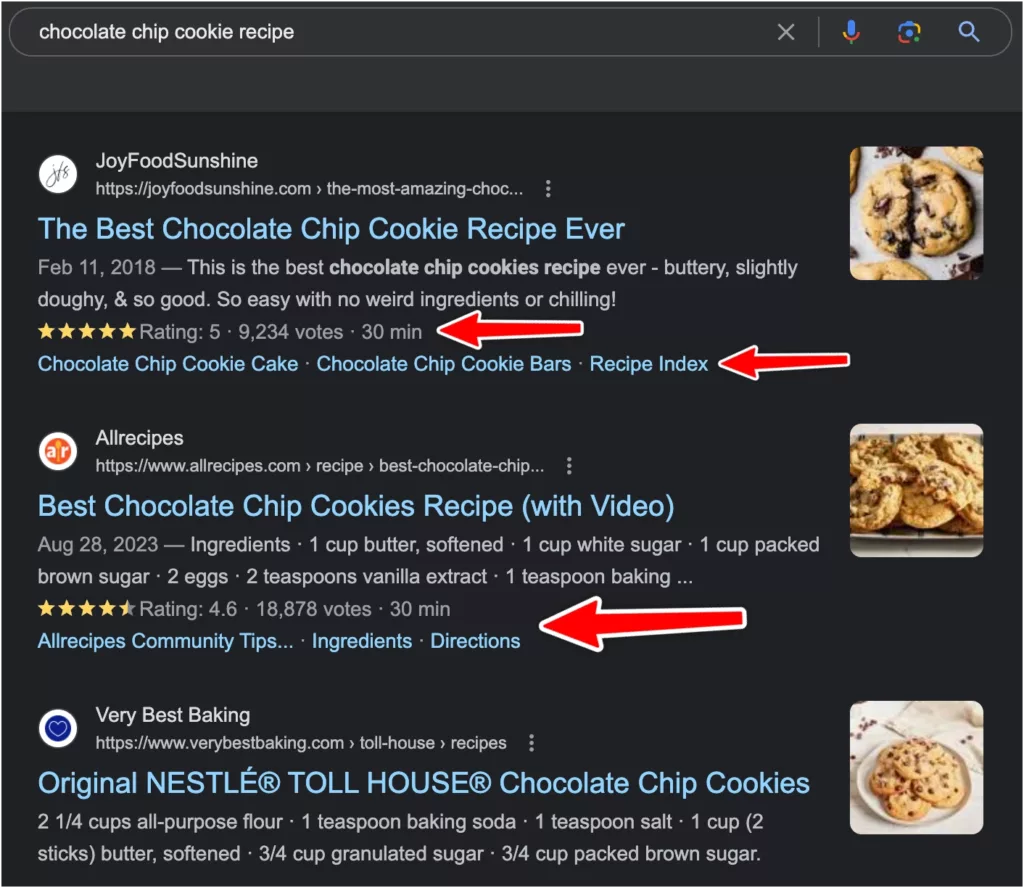
The reviews and additional information are the rich results. By contrast, the third listing doesn’t feature rich results and includes less information, making it stand out less.
The Importance of Rich Results
Rich Results can vastly improve your website’s visibility and user engagement in search results. Here’s why they’re important:
- Enhanced Visibility: Rich Results help your website stand out from the crowd. By offering more than just the title and description, they catch the user’s attention and prompt more clicks to your website.
- Increased Traffic: Because they are more eye-catching and informative, they often lead to higher click-through rates, which translates into increased website traffic.
- Improved User Experience: Rich Results provide users with valuable information upfront. This could be a blog summary, the cooking time for a recipe, or the average review rating for a product. It lets users decide whether to click on your site, enhancing the overall user experience.
- Potential for Higher Conversions: With increased traffic and improved user experience, your site’s conversion and sales potential increases. Users are more likely to trust and engage with sites that provide detailed, transparent information.
Types of Rich Results
Many kinds can appear in search listings, including:
- Featured Snippets: Summary that appears at the top of search results
- Knowledge Panels: Box on the right side of search results with information about a topic
- Rich Cards: A visually rich format for displaying information, such as recipes or products.
- Reviews: Star ratings and review snippets that appear in search results
- Event Listings: Information about upcoming events, including dates, times, and locations
- Video Thumbnails: A preview of a video that appears in search results
How to Generate Rich Results
Now that we understand the importance, let’s walk through the process of creating them:
1. Choose Your Structured Data
Structured data is the foundation of rich results. It’s a standardized format that allows search engines to understand a page’s content and collect information for rich results.
Use JSON-LD. It’s the format recommended by Google and offers significant benefits over alternatives. However, your capabilities will depend on your website, CMS, and other factors, so research your options if this method doesn’t work for you.
2. Select The Appropriate Schema
Schema.org offers shared vocabularies that webmasters can use to mark up their pages. There are many types of schemas. Here are some of the most common:
Knowing which schema types are available will aid your content strategy and help you earn rich results.
3. Implement Structured Data
Once you’ve selected the right schema, it’s time to implement it on your website. This process involves adding structured data to your webpage’s code.
It’s worth noting that the process might require some technical knowledge, particularly of HTML and JSON-LD. If you’re uncomfortable doing this yourself, you might want to enlist the help of a developer.
4. Test Your Implementation
Once you’ve implemented structured data, use Google’s Rich Results Test to verify your setup. The tool will identify any errors in your structured data, allowing you to correct them and ensure your pages are eligible for rich results.
5. Monitor Your Results
After implementing and verifying your structured data, monitor your website’s performance in search results. Google Search Console is an excellent tool for tracking the performance of your rich results. It provides insights into how often your site appears in search results, its average position, click-through rates, and more.
Advanced Tips
While the above steps give you a good foundation, there are more advanced strategies you can implement to leverage rich results further:
- Use More Specific Schemas: While using a general schema can help you get started, using more specific schemas whenever possible can increase your chances of getting rich results. For example, don’t just use the general ‘Product’ schema on a product page. If it’s a book, use the ‘Book‘ schema, etc.
- Leverage Structured Data Generators: If you’re uncomfortable writing structured data yourself, several structured data generators are available online. We like this Schema Markup Generator and the Structured Data Markup Helper from Google. These tools guide you through creating structured data, making it easier for beginners and developers alike.
- Monitor Search Console Regularly: Search Console is a valuable tool for checking whether your rich result efforts are paying off. Regular monitoring allows you to understand how your rich results are performing and make any necessary adjustments.
- Stay Updated: Search engines regularly update their guidelines and algorithms. Staying updated on these changes will help you stay ahead of the curve and make necessary adjustments to your structured data and overall SEO strategy.
Bottom Line
Rich results are invaluable for improving your website’s visibility and user experience. While implementing them might require a bit of technical prowess, the benefits they provide in terms of improved traffic and potential conversions make them a worthy investment.
Providing genuine user value is key to successful SEO and rich results. If you keep this in mind, you should see success in your efforts.