No products in the cart.
If you work on websites, themes, or custom front-end projects, Open Props is worth understanding. It gives developers a practical way to use design tokens in regular CSS without adopting a full CSS framework.
This article explains what Open Props is, how it works, when it is useful, and how it compares to tools like Tailwind CSS and Bootstrap.
What Is Open Props?
Open Props is an open-source library of design tokens built with native CSS variables. It provides a standardized system for spacing, typography, colors, shadows, animations, and other common design values without requiring a CSS framework.
Instead of inventing your own design scale for every project, Open Props provides a consistent foundation you can use across websites, themes, applications, and design systems.
Because it is built entirely on standard CSS, Open Props works with virtually any front-end stack while allowing developers to continue writing their own styles and components.
What Are Design Tokens?
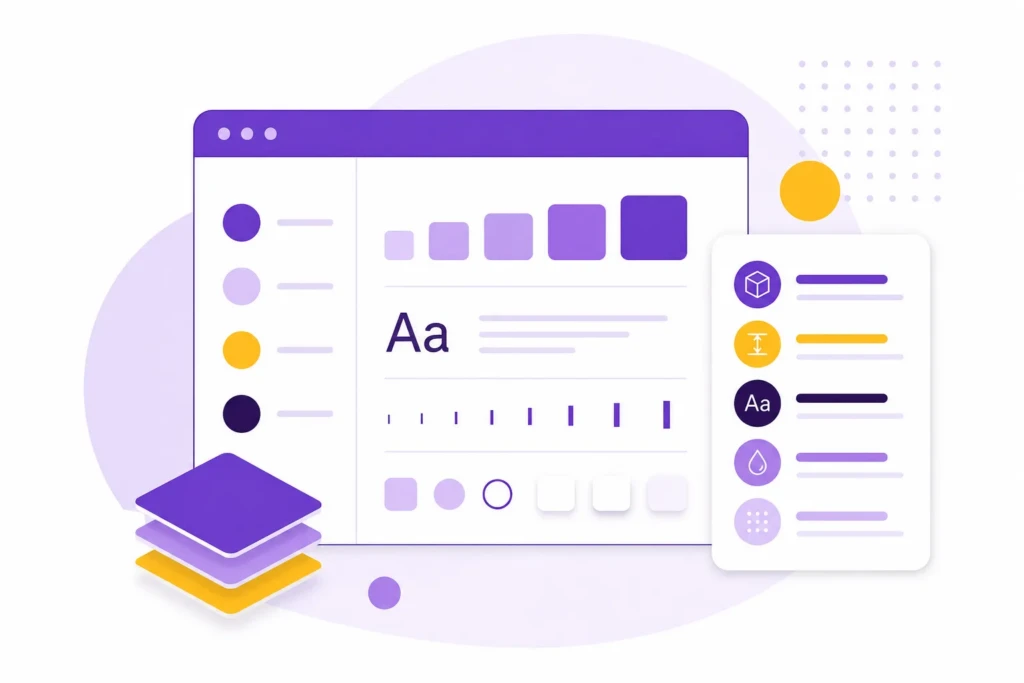
Design tokens are reusable values that define visual decisions across a project.
Examples include colors, spacing values, typography sizes, border radii, and animation timings.
Rather than hard-coding these values repeatedly throughout a codebase, design tokens create a single source of truth that can be reused everywhere.
For example, a design token might define a primary brand color or a standard spacing unit. Components throughout the site then reference those values rather than creating their own versions.
Open Props is a collection of prebuilt design tokens that developers can start using immediately in their projects.
Is Open Props a CSS Framework?
Unlike Bootstrap or Tailwind CSS, Open Props is not a CSS framework. It does not provide components, layouts, or utility classes. Instead, it provides reusable design tokens that developers can use within their own CSS.
Understanding what Open Props is not helps explain why the project was created in the first place.
Who Created Open Props?
Open Props was created by Adam Argyle as part of a broader effort to make modern CSS more approachable and consistent. The project was designed around native web standards and has gained popularity among developers looking for lightweight alternatives to larger front-end frameworks.
Rather than replacing CSS, Open Props aims to make CSS easier to use by providing thoughtfully organized design tokens that work across projects and platforms.
How Open Props Works
Open Props is built around native CSS variables.
When included in a project, it loads a collection of predefined properties such as:
--size-1
--size-2
--size-3

--radius-1
--radius-2
--radius-3

--shadow-1
--shadow-2
--shadow-3
You then reference these variables throughout your CSS.
For example:
.card {
  padding: var(--size-5);
  border-radius: var(--radius-3);
  box-shadow: var(--shadow-2);
}
Because everything uses shared variables, updating styles becomes much easier.
If your design system changes, you adjust the variables instead of hunting through dozens of stylesheets.
This approach aligns well with modern CSS architecture and makes maintaining larger projects significantly easier.
What Open Props Looks Like in Practice
One of the easiest ways to understand Open Props is to compare how a typical project evolves with and without it.
In many websites, spacing and styling decisions are made one component at a time. A button gets 18px of padding. A card gets 24px. A form field gets 20px. Over time, these small decisions create inconsistency throughout the project.
Open Props encourages developers to work from predefined scales instead.

A button might use var(--size-3) for padding. A card might use var(--size-5). A layout container might use var(--size-8).
The result is not necessarily better-looking designs. The benefit is that design decisions become easier to repeat consistently.
When a project uses the same spacing scale, typography scale, and sizing system throughout the interface, new components tend to fit naturally alongside existing ones. This reduces design drift and makes future updates more predictable.
The exact values become less important than the system itself. Designers and developers can make decisions more quickly because they select from an established set of options rather than creating new values each time.
This approach creates a more consistent user experience while reducing the amount of styling that needs to be maintained throughout the project.
What Comes With Open Props?
Open Props includes far more than spacing and typography variables.
The library contains predefined systems for many of the design decisions that developers repeatedly make when building interfaces, including:
- Spacing scales
- Font sizes
- Font weights
- Color palettes
- Shadows
- Border radii
- Gradients
- Aspect ratios
- Animation timings
- Easing functions
- Layout sizing values
- Z-index scales
This gives developers a consistent starting point without requiring them to define every design token themselves.
One of the strengths of Open Props is that these values are organized into predictable scales. Instead of choosing arbitrary numbers throughout a project, developers can work from a shared system that promotes consistency across components and layouts. This structure helps reduce arbitrary design decisions and makes it easier to create cohesive interfaces as projects grow.
Why Open Props Exists
To understand Open Props, it helps to understand the problem it is trying to solve.
Most CSS projects eventually accumulate hundreds of small design decisions. Spacing values get copied and pasted. Border radii vary from component to component. Colors drift slightly over time. New developers introduce different conventions than previous developers.
The result is often a website that works but becomes increasingly difficult to maintain.
Many teams could create their own design token system from scratch. The appeal of Open Props is that it removes much of the initial setup work while providing a system that has already been tested across a wide range of projects. Developers can start with sensible defaults and customize them as needed rather than building every scale and value from the ground up.

Open Props provides a standardized set of design tokens that developers can use across an entire project. Instead of inventing spacing scales, shadow systems, typography sizes, and animation values from scratch, developers can start with a consistent foundation.
This approach is similar to creating an internal design system, except much of the work has already been done for you.
The goal is not to eliminate CSS. The goal is to make CSS more predictable, more consistent, and easier to maintain over time.
For individual developers, this reduces repetitive work. For teams, it creates a shared language around design decisions. For clients, it often results in websites that are easier to update and extend months or years later.
Why Open Props Appeals to Theme Developers
Open Props has become especially popular among developers who build custom websites, themes, and marketing sites that rely heavily on traditional CSS.
Unlike many application-focused projects, theme development often emphasizes maintainability, portability, and long-term ownership. Developers working on custom themes often prefer to keep styling in traditional CSS rather than rely heavily on utility classes.
Because Open Props is built entirely on CSS variables, it integrates naturally into these workflows. Templates remain clean, styles remain centralized, and projects can often be maintained with fewer dependencies.
Because Open Props consists primarily of CSS variables rather than large component libraries or generated utility classes, it can fit naturally into performance-focused projects that aim to keep dependencies to a minimum.
This does not make Open Props better than utility-first frameworks like Tailwind. It simply makes it a natural fit for developers who already prefer working directly with CSS.
How to Start Using Open Props
You can install Open Props through npm packages, CDN imports, or direct CSS imports depending on the workflow you’re using. Once included, the design tokens become available as standard CSS variables throughout the project.

The easiest way to adopt Open Props is not to rebuild an entire project around it. Instead, start by replacing the values that tend to become inconsistent.
Spacing, border radius, shadows, and typography are usually the best starting points. These are areas where developers often end up with dozens of slightly different values over time.
For a new project, Open Props can act as the foundation of your design system from day one. For an existing project, it can be introduced gradually as components are updated or redesigned.
One practical approach is to use Open Props for sizing and spacing while keeping your existing colors and branding. This allows you to achieve consistency without significantly changing the site’s visual appearance.
Because Open Props is built on native CSS variables, adoption can be incremental rather than all-or-nothing.
Can You Customize Open Props?
Yes. Open Props is designed to provide a foundation, not a rigid design system.
Developers can override individual values, extend existing scales, or selectively use only the portions of the library that fit their needs.
For example, a project might use Open Props for spacing and shadows while relying on its own brand colors and typography system.
This flexibility is one reason Open Props works well across different types of projects. It provides consistency without forcing developers into a specific visual style.
Where Open Props Makes the Most Sense

Open Props can be used almost anywhere CSS is used, but it provides the most value in projects that rely heavily on custom styling.
The biggest benefit comes from creating consistency without forcing developers into a particular framework or component system. Teams can continue writing their own CSS while working from a shared set of design decisions.
Projects that benefit most from Open Props often share a few characteristics:
- A meaningful amount of custom CSS is being written
- Design consistency is important
- Multiple developers may contribute over time
- Long-term maintainability matters
- The project aims to avoid unnecessary framework complexity
These conditions are common in custom WordPress themes, Shopify themes, agency-built websites, marketing sites, static websites, and internal design systems.
Open Props can be less valuable when a project already has a well-established styling workflow. For example, a React application built around Tailwind CSS may already have conventions that solve many of the same organizational challenges. Similarly, visual website builders such as Webflow often handle much of the design system structure through their own interfaces.
The most useful question is not which platform you’re using. The better question is whether your project would benefit from reusable design tokens while still relying on custom CSS. When the answer is yes, Open Props is often a strong fit.
Choosing Between Open Props, Tailwind, and Bootstrap
Many developers encounter Open Props while evaluating other front-end tools. The simplest way to think about the difference is this:
| Tool | Primary Goal |
|---|---|
| Open Props | Provide reusable design tokens |
| Tailwind CSS | Provide utility classes for building interfaces |
| Bootstrap | Provide prebuilt components and layouts |
These tools are not necessarily direct competitors.
A developer choosing Bootstrap is often looking for speed and ready-made components.
A developer choosing Tailwind is usually looking for a utility-first workflow.
A developer choosing Open Props is often looking for a cleaner way to organize design decisions while still writing traditional CSS.
Understanding that distinction makes it easier to evaluate whether Open Props fits your workflow.
Common Misunderstandings
Many developers initially expect Open Props to replace their entire styling workflow. That’s usually not the right mindset. Let’s clear up some common assumptions about Open Props.

It Doesn’t Replace CSS
You still write CSS.
Open Props simply gives you better building blocks.
It Doesn’t Replace Components
You’ll still need to create:
- Cards
- Buttons
- Layouts
- Navigation systems
Open Props provides values, not UI elements.
It Doesn’t Automatically Create Design Systems
Open Props gives you the foundation.
You still need thoughtful design decisions.
A messy project can still be messy with Open Props.
It just gives you better defaults.
Tradeoffs to Consider
Open Props solves a specific problem, but it is not the right solution for every project.
Teams that already rely heavily on utility-first workflows may find that Open Props overlaps with conventions they already use. Likewise, developers looking for prebuilt components or complete UI systems will still need additional tools.
Open Props also assumes that developers are comfortable writing CSS. While it provides reusable values and structure, it does not remove the need to build layouts, components, and styling rules yourself.
For many developers, that flexibility is a benefit. For others, it may represent more work than a framework that provides higher-level abstractions.
Final Thoughts
Open Props gives developers a structured way to create consistent interfaces without adopting a full CSS framework. By building on native CSS variables and reusable design tokens, it provides many of the benefits of a design system while remaining lightweight and flexible.
For custom websites, themes, marketing sites, and other front-end projects, Open Props often strikes an excellent balance between structure and flexibility. It provides the consistency of a design system while allowing developers to keep writing straightforward CSS.
The key question isn’t whether Open Props is better than Tailwind or Bootstrap. The real question is whether your project benefits more from design tokens, utility classes, or prebuilt components.
For many client websites and custom themes, Open Props is often the simplest solution that still scales well over time.

Work With TCB Studio
Choosing the right front-end architecture affects performance, maintainability, SEO, and long-term development costs. At TCB Studio, we help businesses and creators make practical technology decisions that align with their actual goals rather than chasing trends.
Whether you’re building a Shopify theme, a custom WordPress site, improving site performance, or creating a more maintainable development workflow, the right foundation makes every future update easier.