No products in the cart.

Google Ads can help a small business reach people who are already searching for its products or services. The challenge is deciding how much to spend and whether the traffic produces enough qualified business to justify the cost.
There is no universal Google Ads budget. Click costs, competition, search volume, conversion rate, customer value, location, and lead response time all affect performance.
This article explains how to set a realistic budget, track results that connect to revenue, and avoid common sources of wasted spend. The goal is not to generate the most clicks. It is to attract qualified prospects at a cost the business can support.
Is Google Ads a Good Fit for Your Business?

Google Ads is usually most effective when customers are actively searching for a service, product, or provider. Someone searching for “emergency plumber near me” has stronger immediate intent than someone searching for general plumbing information.
Paid search is more likely to work when the business has a clear offer, a realistic service area, a relevant landing page, and a reliable process for responding to leads. It may not be the best first investment when search demand is limited, the offer is unclear, or the business cannot support the cost of acquiring a customer.
The value of Google Ads depends on what happens after the click. If the campaign reaches the right people and turns enough of them into profitable customers, it may be worth expanding. If it only produces visits or low-quality inquiries, the targeting, offer, landing page, or follow-up process needs attention.
What Should a Small Business Budget for Google Ads?

Set the budget around the number of qualified leads or sales the business needs. Then estimate how many clicks may be required to produce them and what those clicks are likely to cost.
There is no reliable minimum budget for every small business. A local service with limited competition may gather useful data with a smaller budget than a business competing for expensive keywords in a crowded market.
Start With a Focused Test
A focused test should show which searches attract relevant prospects, how much qualified traffic costs, and whether visitors take the desired action. Set a defined testing period and review the campaign regularly instead of spending indefinitely without knowing what the traffic produces.
For example, a business spending $1,500 per month at an average cost of $6 per click would receive about 250 visits. At a 5% conversion rate, that could produce 12 or 13 leads at approximately $115 to $125 per lead.
That estimate only becomes useful when compared with customer value. The business also needs to know how many leads become customers, how much profit each customer generates, and whether it can respond quickly enough.
| Factor | Effect on the budget |
|---|---|
| Cost per click | Higher click costs require more spending |
| Conversion rate | Better pages can produce more leads from the same traffic |
| Customer value | Higher-value customers can justify higher acquisition costs |
| Close rate | Stronger follow-up supports a higher cost per lead |
| Competition | Competitive markets often require higher bids |
Setup, tracking, landing page work, call tracking, and management may also add to the total advertising cost.
What Should You Advertise First?

Start with the product or service that has the clearest demand, strongest margin, and simplest path to conversion. Promoting every offer at once spreads the budget thin and makes performance harder to evaluate.
Prioritize an offer that is available, profitable, easy to explain, and supported by a clear next step. High-intent searches are usually the best starting point when the goal is immediate leads or sales.
| Search | Likely intent |
|---|---|
| “Emergency plumber near me” | Immediate service need |
| “Physical therapy clinic in Kansas City” | Local provider research |
| “Buy replacement office chair” | Product purchase |
| “How plumbing works” | Informational research |
Informational searches may support content marketing, but they are usually less valuable for a small initial advertising budget because the searcher may not be ready to buy.
Which Google Ads Campaign Type Should You Use?
The right campaign type depends on how customers search, what the business sells, and how much reliable conversion data is available. For many small businesses, the clearest starting point is the campaign type that provides the strongest connection between ad spend and customer action.
Search Campaigns
Search campaigns reach people who are actively looking for a product, service, or provider. Keep each campaign focused on a specific offer or customer need, and make sure the search term, ad, and landing page address the same problem.
Shopping Campaigns
Shopping campaigns may suit e-commerce businesses with accurate product feeds, competitive pricing, reliable inventory, and enough profit margin. Product titles, images, availability, and landing pages all affect the quality of the traffic.
Performance Max and Display Campaigns
Performance Max and Display campaigns can expand reach, but they are harder to evaluate when conversion tracking is weak or the account has little data. Consider broader campaign types after the business understands which customers and actions are valuable.
What Should You Track?
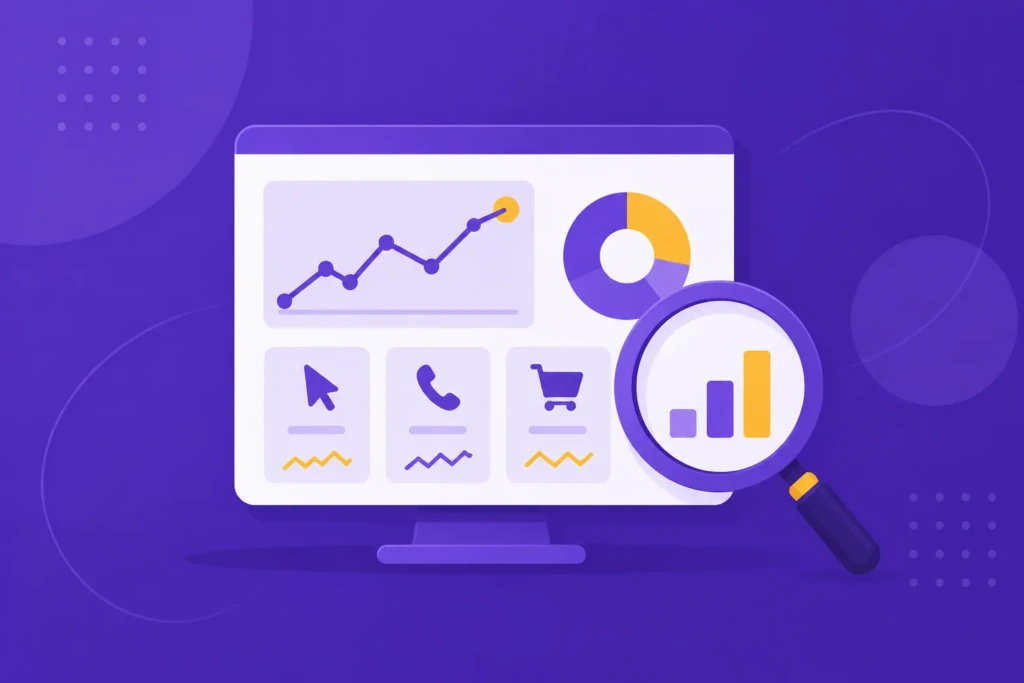
Clicks and impressions can help diagnose a campaign, but they do not show whether the business is making money. Track the actions that connect advertising with revenue, such as purchases, quote requests, phone calls, bookings, appointments, and qualified lead submissions.
Use platform metrics such as cost per click, click-through rate, search impression share, and budget pacing to understand delivery and relevance. Treat them as diagnostic information rather than proof of success.
The most useful business metrics include cost per qualified lead, cost per customer, lead-to-customer rate, average order value, customer lifetime value, and return on ad spend.
| Metric | What it tells you |
|---|---|
| Cost per qualified lead | What it costs to generate a realistic opportunity |
| Cost per customer | What it costs to acquire a paying customer |
| Lead-to-customer rate | How effectively the business converts leads |
| Return on ad spend | How much revenue comes from advertising |
A recorded conversion is not always a valuable conversion. A completed purchase, booked appointment, or qualified sales call usually matters more than a page view or another interaction that does not move the customer closer to doing business.
Set Up Conversion Tracking Before Judging Performance
Traffic data is not enough to evaluate Google Ads. Before deciding whether a campaign is working, confirm that the actions tied to revenue are being recorded accurately.
An e-commerce business may need to track purchases and revenue. A service business may need to track form submissions, phone calls, quote requests, appointments, and bookings. If sales happen offline, connect those sales to the original lead whenever possible.
Test each important conversion before relying on the data. Submit a form, call the advertised number, complete a booking, and confirm that each action appears in the correct account. Check for duplicate conversions and separate primary conversions from minor interactions.
Review lead quality alongside conversion totals. Ten inquiries from people outside the service area may be less valuable than two qualified prospects who are ready to buy.
Reliable tracking will not make an unprofitable campaign profitable, but it will show where the problem is. The business can then decide whether to improve the targeting, offer, landing page, or follow-up process.
How to Decide Whether Google Ads Is Profitable

Cost per lead is not the same as cost per customer. A campaign can generate inexpensive inquiries and still lose money if the business rarely closes them or has low profit margins.
Suppose a service business earns $1,200 from an average customer and keeps $600 after direct delivery costs. If one in five leads becomes a customer, a cost of up to about $120 per lead may be workable before other overhead.
This is only a planning estimate. The acceptable cost depends on profit margins, close rate, repeat business, customer lifetime value, sales capacity, and follow-up speed.
Compare Google Ads data with actual sales records. Some customers call after seeing an ad, return later, or become customers after speaking with staff. The goal is to acquire profitable customers at a cost the business can support.
What Makes a Google Ad More Effective?
Effective ad copy matches the searcher’s intent and gives them a clear reason to take the next step. It should identify the product or service, include the location when relevant, address a specific problem, and communicate a credible benefit.
Specific language is more useful than vague claims. “Same-day appliance repair in Overland Park” tells the searcher more than “Reliable service from a local team”.
Use ad assets such as sitelinks, callouts, structured snippets, call assets, and location assets to provide additional context. These assets can improve visibility, but they cannot fix irrelevant targeting or an unclear offer.
The ad should also match the landing page. If the searcher expects one service but arrives on a generic page or sees a different offer, the campaign is likely to lose relevance and conversions.
Build a Landing Page That Can Convert Paid Traffic

Send paid visitors to the page that best matches the search and ad. A generic homepage often forces people to look for the right service, product, location, or contact option.
A useful landing page confirms relevance, explains the offer, establishes trust, and makes one primary action easy. That action may be a phone call, quote request, booking, or purchase.
| Weaker approach | Stronger approach |
|---|---|
| Every click goes to the homepage | A page built for the specific offer |
| Several competing calls to action | One clear primary action |
| No service-area information | Clear location and availability |
| Long form with unnecessary questions | Short form requesting essential details |
| No trust signals | Reviews, credentials, results, or case studies |
| Vague headline | Headline that reflects the search and ad |
Check that the page works well on mobile, loads quickly, displays phone numbers clearly, and keeps the message consistent from the ad through to the conversion.
Common Google Ads Mistakes to Avoid
Small businesses often waste budget by making campaign decisions before they have reliable data. These mistakes can reduce lead quality, hide the real cost of customer acquisition, and make a campaign appear more successful than it is.
1. Launching Without Conversion Tracking
Clicks do not show whether a campaign produces business. Track the actions that matter before judging performance, including calls, forms, bookings, purchases, or qualified leads.
2. Using Broad Targeting Too Early
Broad keywords and large service areas can quickly consume a small budget. Start with tighter targeting and expand only when the data shows that the additional traffic is relevant.
3. Choosing Keywords Based Only on Volume
High-volume searches may attract researchers or people outside the service area. Commercial intent and customer fit matter more than popularity when the budget is limited.
4. Ignoring Search Terms
Review the searches that trigger ads and add negative keywords when queries are irrelevant, too general, or unlikely to produce a customer.
5. Sending Every Click to the Homepage
A generic homepage may not answer the searcher’s specific question. Use a relevant service, product, or location page with one clear next step.
6. Changing Campaigns Too Often
Constant edits make it difficult to tell what caused a performance change. Allow enough time for useful data to accumulate, then make focused adjustments.
7. Measuring Clicks Instead of Customers
The goal is not maximum traffic. Evaluate the campaign based on qualified leads, customers, revenue, and profit.
A Manageable Google Ads Review Routine

Google Ads does not require constant monitoring, but it does require regular review. A simple schedule helps catch wasted spend, identify changes in lead quality, and prevent small problems from continuing unnoticed.
Weekly Review
Review spending, search terms, negative keywords, location accuracy, and lead quality. Also check that forms, phone numbers, booking links, and landing pages are working properly.
Monthly Review
Compare the cost per qualified lead or customer across campaigns. Review which ads, keywords, locations, and landing pages are producing the strongest results, then make one or two focused improvements.
Quarterly Review
Recalculate the acceptable acquisition cost using current margins, close rates, customer value, and sales capacity. Use that review to decide whether to scale, maintain, restructure, or pause campaigns.
| Frequency | Main focus |
|---|---|
| Weekly | Search terms, spending, lead quality, and technical issues |
| Monthly | Performance trends, testing, and budget allocation |
| Quarterly | Profitability, customer value, and growth decisions |
When to Manage Google Ads Yourself
A focused Google Ads account can often be managed internally when the business serves a limited area, promotes a small number of offers, and has someone who can review performance consistently.
Outside help may be worthwhile when the account includes multiple locations, product feeds, complex conversion tracking, substantial spending, or a long sales cycle. Professional support can also help when the business is receiving leads but cannot determine which campaigns are producing profitable customers.
Before hiring a freelancer or agency, ask how conversions and lead quality will be measured, who owns the advertising account, what the management fee includes, and how recommendations will be connected to revenue. The business should retain account access and receive reporting that explains outcomes, not just clicks and impressions.
Conclusion
Google Ads can help a small business grow, but success does not come from generating the most clicks. It comes from reaching people with meaningful intent and acquiring customers at a cost the business can support.
Start with a focused offer and high-intent searches. Set the budget around customer value, track actions that connect to revenue, and review lead quality alongside campaign data.
Work with TCB Studio
Google Ads works best when the campaign, landing page, tracking, and follow-up process all support the same business goal. TCB Studio helps small businesses build and improve practical paid search systems that focus on qualified leads, customer acquisition cost, and measurable results.
If you need help planning campaigns, improving conversion tracking, or reducing wasted ad spend, explore our PPC services for small businesses. We can help you create a focused advertising strategy that fits your budget and supports sustainable growth.